|
Mission & History | MAA Membership | Traveling Exhibit | MAA Book | Contact | Candidates Circle
The Miniature Artists of America - Mission & HistoryMission Statement | History | Exhibits | Recognition | Support |
|
MAA Mission
|
|
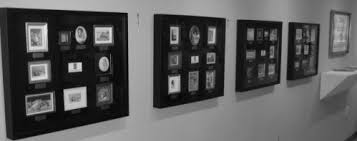
MAA History Miniature Artists of America, the first national society to honor outstanding practitioners of American miniature art, was founded in Clearwater, Florida, in 1985. In addition to recognizing leading contemporary miniaturists, its purpose is to broaden public understanding and appreciation of this ancient art form. An invitational organization, MAA accepts no more than ten artists each year into its ranks as Signature Members. The Jury of Admission selects candidates from artists who have been admitted to at least eight competitive shows staged by major nonprofit miniature societies in the United States within the previous five years and who have received awards from these shows. The Jury may also invite other outstanding professionals who work "in little" but who may not be associated with a particular miniature art society. However, they must be nominated by three Signature Members and submit at least five works for review by the Jury. The Society recognizes the best practitioners of miniature art being exhibited in America. As such, the Membership is not limited to American artists. In many of the world's civilizations there was a fascination with creating in small scale. Ancient Greeks adorned their walls with small murals while coins and rings often bore engraved portraits. In Persia, the shahs maintained the best artists of the day to paint the court and illustrate copies of the Koran and other great books, both religious and secular. Monks in the Middle Ages embellished manuscripts with delicate illuminations and bordered them with a red lead pigment called 'minium' from which the word 'miniature' later evolved. The Elizabethan era was noted for its exquisite miniature portraits on vellum and later, ivory and evokes memories of names such as Holbein, Hilliard, Oliver and others. Easily carried in pocket or locket, they served much as photographs do today and represented a very personal form of art. An exchange of portraits of sons or daughters was found practical by wealthy families who were arranging marriages of their offspring. The portrait further served as a useful identification purpose when affixed to a contract or perhaps a treaty. The westward movement of civilization brought miniaturism and its European heritage to America's shores. Influenced by the freedom and challenges of the New World, it soon began reflecting its changed environment as it sought its new identity. American history is dotted with names of such prominent miniaturists as the Peales, Charles Fraser, Henry Benbridge and Edward Green Malbone. The advent of photography in the 19th century had a devastating effect on miniature portraiture, driving it close to extinction. Miniature art today is experiencing a strong revival of interest - by artists and collectors. Contemporary miniaturists work in a variety of media and explore limitless subject matter and styles. MAA Exhibits Miniature art is often described as "fine original art done in small scale." A commonly accepted American guideline among many of today's miniaturists is that subjects do not exceed one-sixth their natural size. Exceptions are permitted for abstractions or tiny subjects not lending themselves to the "one-sixth" application provided they embrace the delicate essence and spirit of miniaturism. MAA's Inaugural Exhibit was held at the Arts Club of Washington, DC in June, 1988. A second public exhibit was held in March, 1989, at the Color Works Club, Hilton Head, South Carolina. A juried Traveling Exhibit of Signature Members' works was inaugurated in 1989 which continued into 2014. It visited cities from coast to coast, bringing to art museums, galleries and cultural organizations the story of contemporary American miniaturism. In February 1998, the exhibit made its first trip abroad, accepting an invitation by the City of Clearwater to join its "Pavilion in the Sun" at the Winter Olympics in Japan. Over 125,000 visitors passed through the Pavilion. The exhibit opened the new millennium in January at the Museum of Fine Arts, St. Petersburg, Florida. The summer of 2000 saw the exhibit at the 2nd Exhibition of Fine Art in Miniature of the World Federation of Miniaturists in Hobart, Tasmania, followed by a three-week appearance in the Florida World Pavilion at the Summer Olympics in Sydney, Australia. The exhibit was displayed during the 3rd Exhibition of Fine Art in Miniature of the World Federation of Miniaturists in the International Gallery of the Smithsonian Institution in Washington, DC in June of 2004. MAA artists, Wes and Rachelle Siegrist, demonstrated their miniature painting techniques to the public during the exhibition. A New Tradition
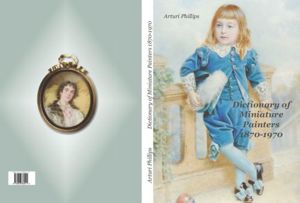
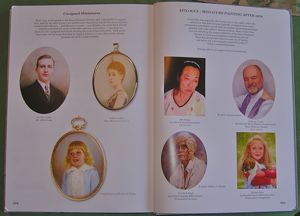
For additional information on the history, and modern scope, of miniature art, please refer to the MAA Book: Modern Masters of Miniature Art in America. MAA, a nonprofit organization, is dedicated to bringing recognition to artists in the vanguard of restoring this long-neglected aspect of our cultural heritage to its proper stature. It encourages artists to affiliate with major miniature societies and participate in their juried exhibits. |
|
MAA Signature Member Recognition
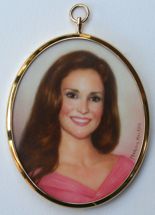
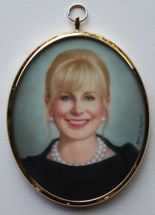
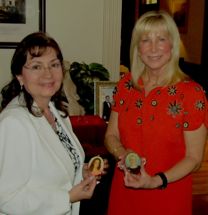
Portraits of Florida’s First Ladies: A lack of recognition and appreciation of the State’s First Ladies in the Capital was brought to public attention in the early 1980s and the Florida Governor’s Mansion Foundation set about to rectify this omission. Their desire was to commission miniature portraits, but they were not aware of any source until the Miniature Art Society of Florida invited a delegation to attend an International Miniature Art Show. At the show they were able to contact portraitists of their choice. The Governor’s Mansion Foundation, of Florida, initiated a program in the early 1980s to memorialize the wives of Florida’s Governors, who had been overlooked in history. The Foundation wanted miniature portraits done in the traditional manner to provide the elegance befitting such recognition. Jane Blake, MAA from Florida, had a worldwide reputation for her miniature portraits and was profoundly influenced by the historical miniature techniques. She patterned her own portraits on the historical principles and produced exquisitely detailed classical works and thus, was chosen to begin this important project. She completed eight portraits before her death. The tradition is still being carried on today by MAA portrait artists. The works are housed in a special display case in the Florida Room at the Florida’s Governor’s Mansion in Tallahassee, FL. See: http://www.floridagovernorsmansion.com/
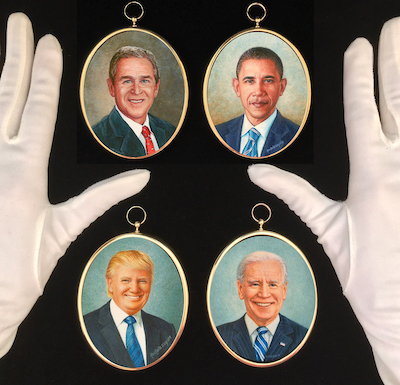
Presidential Portrait Miniatures: Museum collections of miniature paintings are primarily composed of portraiture dating from the 1500s through the early 1900s. Collections of United States Presidents' portraits in miniature are relatively rare with many of the public collections started c. 1919 by the miniaturist, A. J. Rowell. Four sets of Rowell Presidential portrait miniatures are known to exist. However, modern miniaturists have continued only the collections at the Woolaroc Museum and the Butler Institute of American Art to this day. The following MAA Signature Members have contributed to these collections:
|
|
Support the MAA
For information on becoming an MAA Signature Member, or to seek accreditation for a society or exhibition, please see our Candidates Circle page. |
|
Charter Member of the World Federation of Miniaturists
|